Friction review
A list of obstacles in agreed flows with evidence from analytics, feedback or observed tasks.
CRO, analytics & reporting
Conversion optimization fits a site with a meaningful action to measure, such as a purchase, inquiry or signup. We review the journey and available evidence before deciding what to change or test.

CRO, analytics & reporting
Written plan within one to two business days
Overview

Conversion optimisation improves the share of visitors who take the action you want, whether that is an enquiry, a booking or a purchase. It is often the cheapest way to grow, because it makes every visitor you already pay for or earn through search more valuable. Doubling the conversion rate of a landing page has the same effect on leads as doubling the ad budget, at a fraction of the cost.
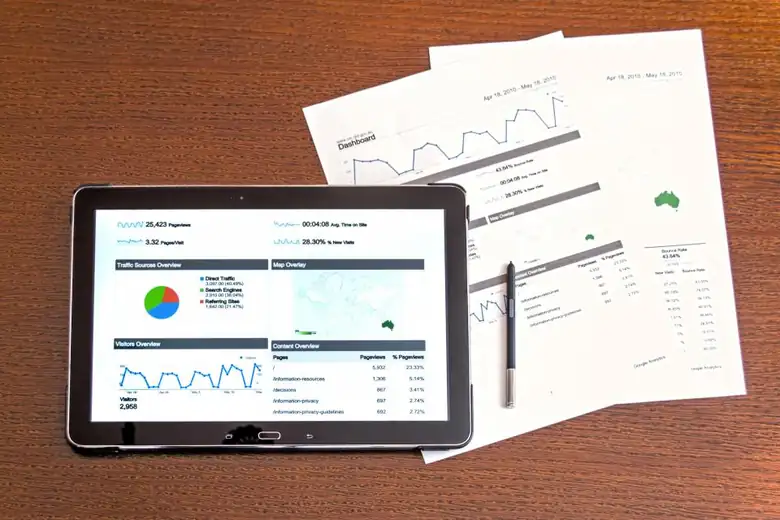
We start by finding where people drop off: analytics funnels, session recordings, heatmaps and form analytics show where visitors hesitate, and a few customer conversations reveal why. Typical fixes include clearer headlines and offers, stronger proof near the call to action, shorter forms, better mobile layouts, faster pages and removing distractions from checkout. Where traffic allows, changes are tested against the original; our guide to landing page experiments covers how.
We are careful with conclusions. Small sites do not have enough traffic for formal tests on every change, so we combine qualitative evidence with before-and-after measurement over sensible periods, and we say clearly when a result is a strong signal and when it is only a hint.
A list of obstacles in agreed flows with evidence from analytics, feedback or observed tasks.
Prioritized changes tied to a hypothesis, page and measurable action.
A plan for comparing the result, with clear limits where traffic or data is sparse.
Agree on the outcome and signals that tell you whether it helped the business.
Inspect common drop-off points and validate where possible with users or examples.
Release or test the most promising change and document what the results can support.
Budget & timing

CRO work is priced as an audit with recommendations, or as a monthly programme of research, changes and testing. The right option depends on your traffic volume and how quickly changes can be implemented.
Typical timeline: An initial research and recommendations phase takes two to three weeks; test cycles then run for at least two weeks each to collect reliable results.
See starting pricesA reliable experiment depends on traffic, baseline and expected change. With limited volume, we can use usability checks and other directional evidence.
We can define a qualified outcome and examine what happens after the form submission instead of measuring form volume alone.
Formal A/B tests need meaningful traffic, but even small sites benefit from fixing obvious friction found in recordings and user feedback.
No, when done properly. We keep important content and headings intact and test changes in ways that search engines understand.
Typically GA4 funnels, Microsoft Clarity or Hotjar for heatmaps and recordings, form analytics and short on-site surveys, all configured with appropriate consent settings.
Where it fits
Conversion optimisation is the right fit when you get decent traffic but too few enquiries or sales, and you want a structured programme of research, fixes and tests rather than a full redesign.
It combines funnel analysis, A/B testing and landing page work, and depends on accurate tracking.
Programmes run in monthly cycles: research, hypotheses, changes or tests, then a short write-up of results so learning builds up over time instead of being lost.

Growth & visibility

Growth & visibility

Growth & visibility
Growth & visibility

Growth & visibility

Growth & visibility
Write down your goal, constraints and the result you want to see.